Overview
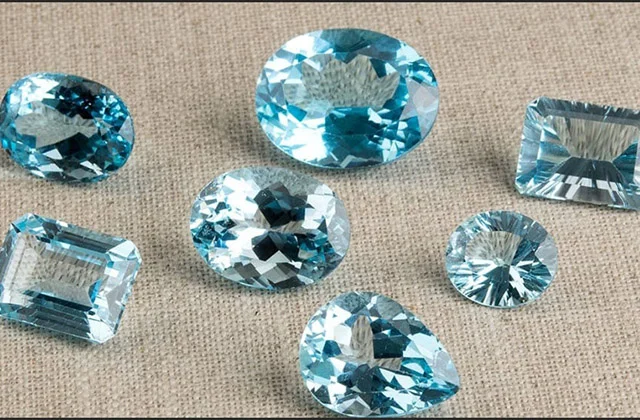
Topaz is an aluminium silicate fluoride mineral that occurs in a wide range of colours. Imperial topaz, a warm orange to pinkish-orange variety, is the most valued. Blue topaz, while the most commercially popular colour, is almost always produced by irradiating and heating colourless topaz. The name may derive from the Sanskrit "tapas," meaning fire.
Physical Properties
Mohs hardness: 8. Refractive index: 1.609 to 1.643. Specific gravity: 3.49 to 3.57. Crystal system: orthorhombic. Topaz has perfect basal cleavage, meaning it can split cleanly along one plane if struck at the right angle. This makes setting and wearing topaz somewhat riskier than its hardness might suggest.
Colour Varieties
Imperial topaz: Orange to pinkish-orange, natural, from Ouro Preto (Brazil). The most valuable. Blue topaz: Almost entirely treated. Three standard shades exist: Sky Blue (pale), Swiss Blue (medium), and London Blue (dark). Pink topaz: Rare in nature; most pink topaz is heated imperial topaz. Colourless (white) topaz: Common and inexpensive.
Major Sources
Brazil (Minas Gerais) produces the finest imperial topaz. Sri Lanka, Nigeria, Pakistan, and Russia also yield natural coloured topaz. The majority of blue topaz originates as colourless material from Brazil or Nigeria, treated in irradiation facilities.
Buying Considerations
The single most important thing to know when buying topaz is that natural blue topaz is extremely rare. Nearly all blue topaz in the market (over 99%) is treated. This treatment is permanent, stable, and widely accepted, but the stone should never be sold as "natural blue." Imperial topaz, in contrast, is natural and commands premium prices, especially in saturated orange to pink-orange with clean clarity.
Need a Topaz certified? GTCL provides comprehensive testing and certification for all gemstone types. Contact us →