
Overview
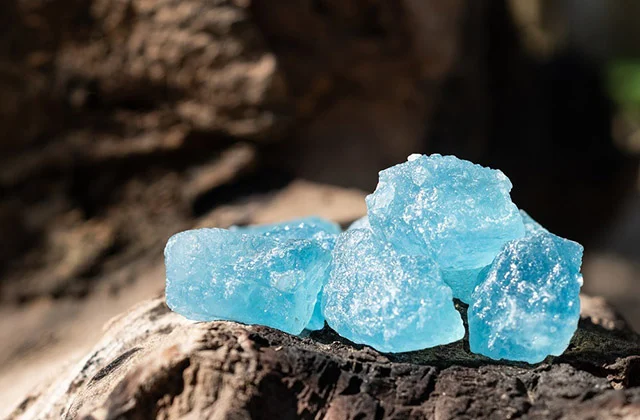
Aquamarine is the blue to blue-green variety of beryl, coloured by trace amounts of iron. It shares its mineral family with emerald, morganite, and heliodor. The name comes from the Latin "aqua marina," meaning sea water. Unlike emerald, aquamarine typically forms clean, inclusion-free crystals, making it ideal for large, faceted gems.
Physical Properties
Mohs hardness: 7.5 to 8. Refractive index: 1.567 to 1.590. Specific gravity: 2.68 to 2.74. Crystal system: hexagonal. Aquamarine has no cleavage and good toughness, making it excellent for all types of jewellery including rings.
Colour and Quality
The most valued colour is a medium, saturated blue without green modifiers. Lighter stones are more common and less expensive. Most gem-quality aquamarine starts as greenish-blue and is heated to a pure blue by removing the green component. This heat treatment is permanent, undetectable, and universally accepted in the trade.
Major Sources
Brazil produces the majority of gem-quality aquamarine, including some exceptional large crystals. The Santa Maria mine in Minas Gerais produced stones with the most intense blue, and "Santa Maria colour" has become a grade name. Madagascar, Nigeria, Mozambique, Pakistan (Skardu), and Afghanistan also produce fine aquamarine.
Notable Stones
The "Dom Pedro," the world's largest faceted aquamarine, weighs 10,363 carats and is displayed at the Smithsonian Institution. Large aquamarines above 20 carats with fine colour are prized by collectors and can command significant per-carat prices.
Need a Aquamarine certified? GTCL provides comprehensive testing and certification for all gemstone types. Contact us →