Overview
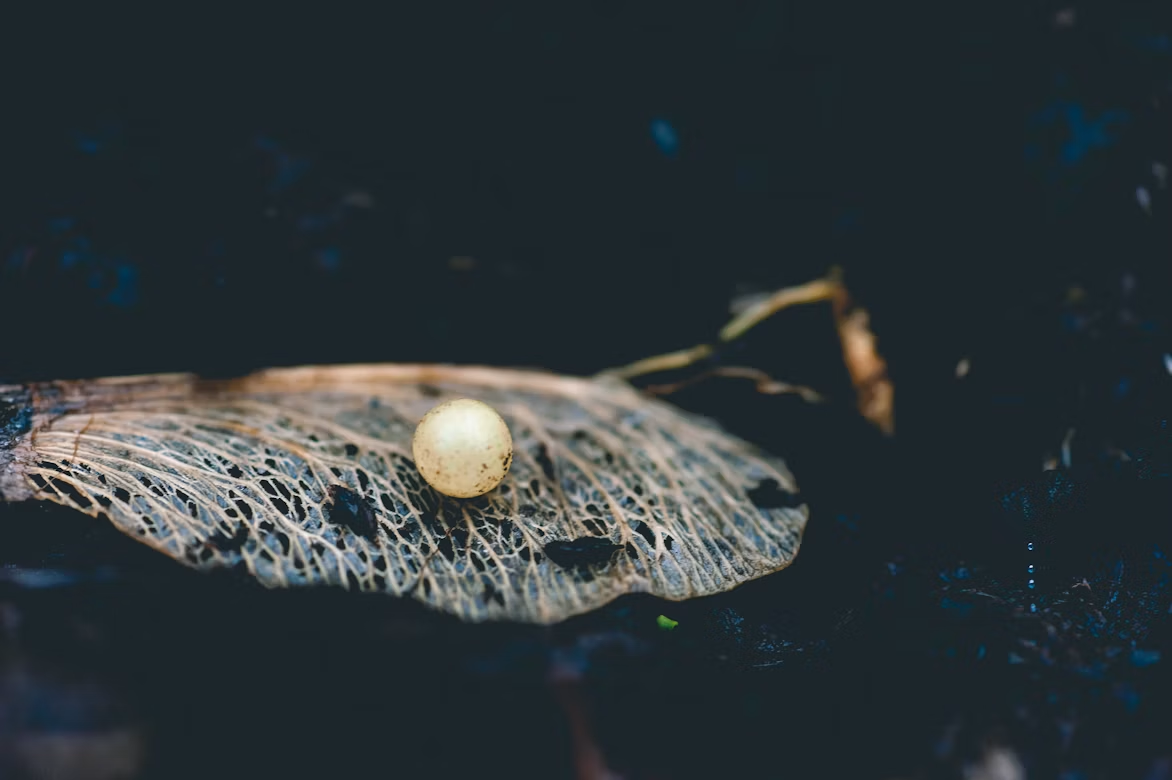
Pearls are organic gems formed inside the soft tissue of mollusks, primarily oysters and mussels. When an irritant enters the mollusk, it responds by coating the foreign body with layers of nacre (aragonite crystals bound by conchiolin). Over time, these layers build up to form a pearl. Natural pearls form without human intervention; cultured pearls are produced by deliberately inserting a nucleus.
Physical Properties
Mohs hardness: 2.5 to 4.5. Refractive index: 1.530 to 1.685. Specific gravity: 2.60 to 2.85. Pearls are not crystalline in the traditional sense. Nacre quality determines lustre, the most important value factor. High-quality nacre produces a sharp, mirror-like reflection with iridescent overtones.
Types of Pearls
Natural pearls: Formed without human intervention. Extremely rare and valuable. Most natural pearls on the market today are antique or estate pieces. Akoya pearls: Saltwater cultured pearls from Japan and China, typically 6 to 8 mm, known for high lustre and round shape. South Sea pearls: The largest cultured pearls (9 to 20 mm), produced by Pinctada maxima oysters in Australia, Indonesia, and the Philippines. Available in white, silver, and golden. Tahitian pearls: Produced by black-lipped oysters in French Polynesia. Natural dark colours ranging from grey to black with green, blue, or purple overtones. Freshwater pearls: Produced by mussels in rivers and lakes, primarily in China. Available in a wide range of shapes, sizes, and colours at accessible prices.
Vedic Significance
Pearl (Moti) represents the Moon (Chandra) in Vedic astrology. It governs emotions, mental peace, mother, fertility, and the mind. Natural pearls are traditionally preferred for Jyotish use, though high-quality cultured pearls are now accepted. The pearl should be white, lustrous, and free of surface blemishes. It is set in silver and worn on the little finger of the right hand on a Monday.
Need a Pearl certified? GTCL provides comprehensive testing and certification for all gemstone types. Contact us →