Overview
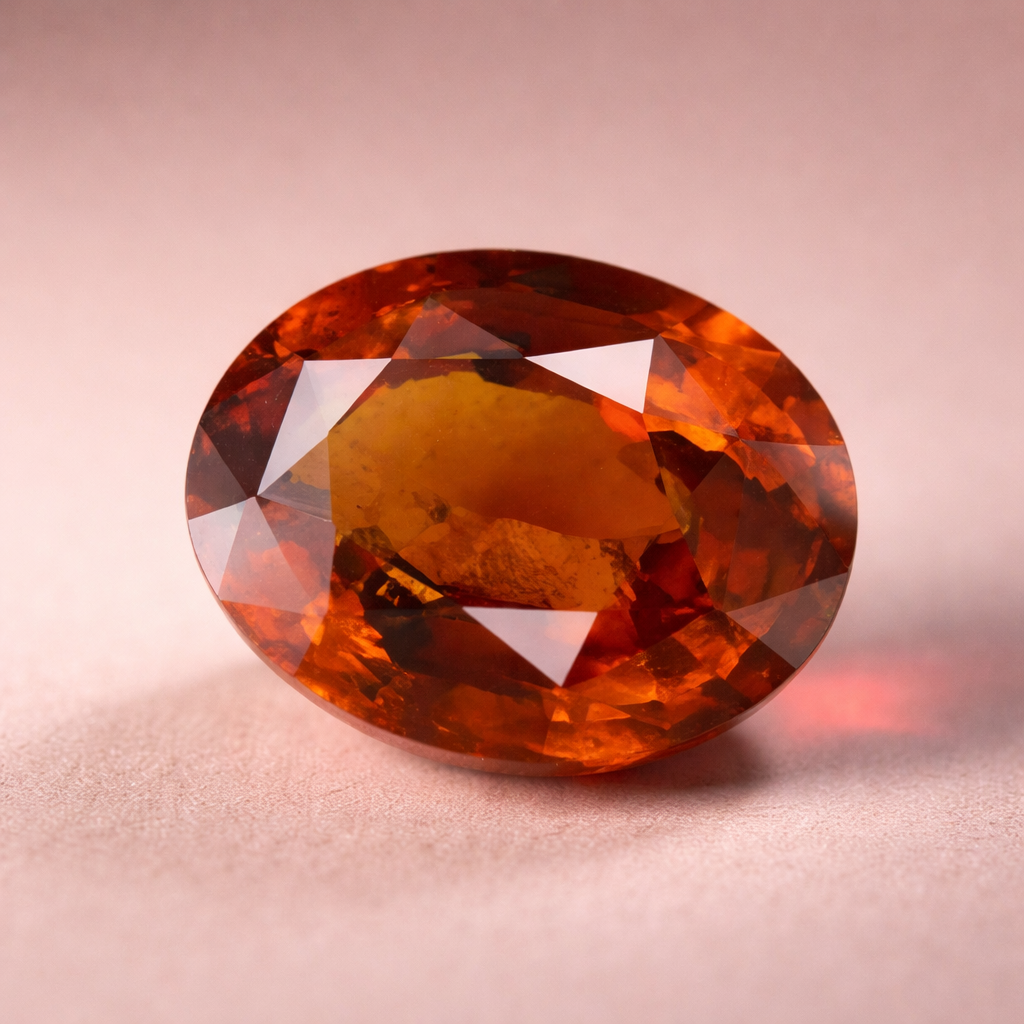
Garnet is not a single mineral but a group of related minerals with similar crystal structures. The garnet family includes almandine (red-brown), pyrope (deep red), spessartite (orange), grossular (green to cinnamon), andradite (green to black), and uvarovite (green). This diversity means garnets span nearly the entire colour spectrum.
Physical Properties
Mohs hardness: 6.5 to 7.5 (varies by species). Refractive index: 1.714 to 1.888. Specific gravity: 3.47 to 4.15. Crystal system: cubic. All garnets are singly refractive. They have no cleavage and good toughness, making them suitable for rings and everyday jewellery.
Notable Varieties
Tsavorite: A vivid green grossular garnet, coloured by vanadium and chromium. Found primarily in Kenya and Tanzania. Fine tsavorites rival emerald in colour at greater brilliance and durability. Demantoid: A rare green andradite garnet with dispersion higher than diamond. Russian demantoids with "horsetail" inclusions are the most prized. Rhodolite: A purplish-red blend of almandine and pyrope, popular for its attractive colour and affordability. Spessartite: Vivid orange to orange-red, sometimes called "Mandarin garnet." Namibian and Nigerian stones command the highest prices. Colour-change garnet: Rare garnets that shift from green in daylight to red under incandescent light, similar to alexandrite.
Major Sources
India (Rajasthan): almandine. Sri Lanka: hessonite and rhodolite. East Africa (Kenya, Tanzania, Madagascar): tsavorite, rhodolite, spessartite. Russia (Ural Mountains): demantoid. Mozambique, Brazil, and the United States also produce various garnet species.
Need a Garnet certified? GTCL provides comprehensive testing and certification for all gemstone types. Contact us →