Overview
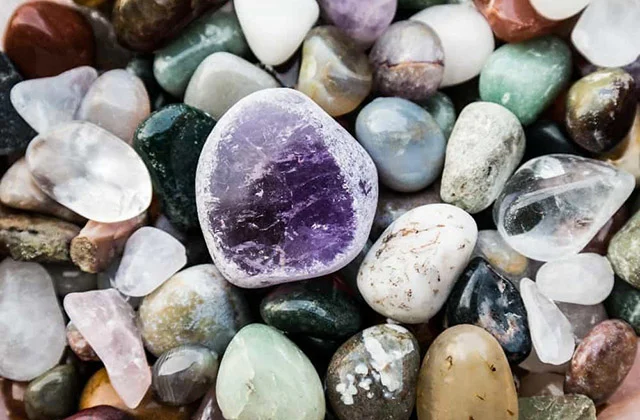
Amethyst is the purple variety of quartz (SiO₂), coloured by iron impurities and irradiation. Until the 19th century, amethyst was considered a precious gemstone on par with diamond, emerald, and ruby. The discovery of vast deposits in Brazil reclassified it as semi-precious, but fine-quality amethyst with deep, saturated colour remains desirable.
Physical Properties
Mohs hardness: 7. Refractive index: 1.544 to 1.553. Specific gravity: 2.65. Crystal system: trigonal. Amethyst is durable enough for everyday jewellery. However, prolonged exposure to strong sunlight or heat can cause fading, particularly in lighter stones.
Colour and Quality
The most valued colour is a deep, saturated reddish-purple to purple. "Siberian" amethyst, a trade term for the finest colour grade, shows a rich purple with red and blue flashes. Colour zoning (alternating lighter and darker zones within the stone) is common and reduces value unless it is invisible face-up.
Major Sources
Brazil is the world's largest producer. Zambia produces smaller but often higher-quality stones with deep colour. Uruguay produces fine dark amethyst from agate geodes. Other sources include Madagascar, South Korea, Russia, and the United States (Arizona).
Uses Beyond Jewellery
Amethyst is one of the most popular stones in the crystal healing community. Large amethyst geodes and clusters are used as decorative pieces and in spiritual practices. The stone has been associated with sobriety, clarity of mind, and protection since ancient Greek times (the name comes from "amethystos," meaning "not intoxicated").
Need a Amethyst certified? GTCL provides comprehensive testing and certification for all gemstone types. Contact us →