
Overview
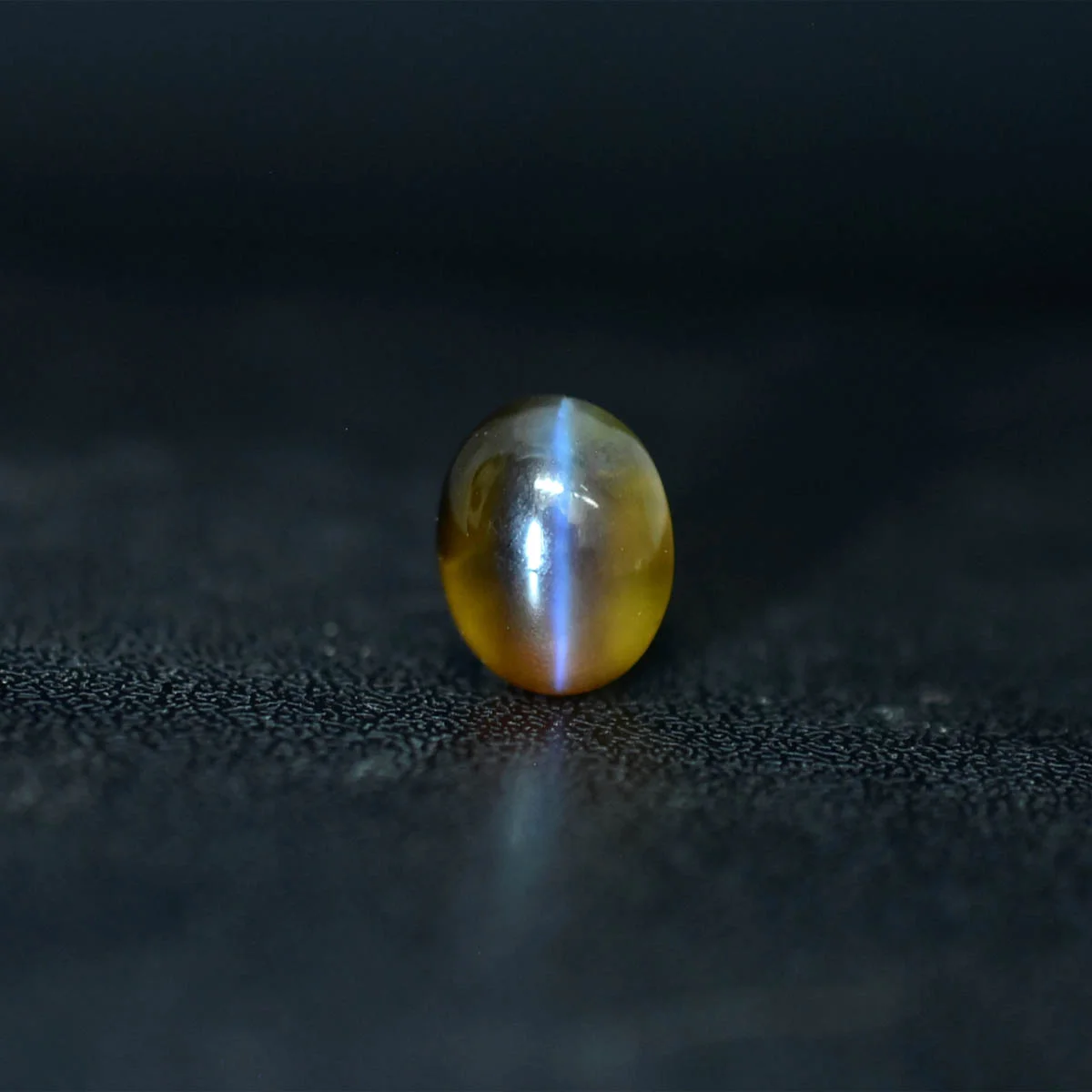
Cat's eye chrysoberyl displays chatoyancy, a sharp band of light that moves across the stone's surface like a cat's pupil. This optical effect is caused by parallel needle-like inclusions of rutile or other minerals that reflect light in a concentrated line. While many gem species can show chatoyancy, the term "cat's eye" without qualification refers specifically to chrysoberyl cat's eye in the gem trade.
Physical Properties
Mohs hardness: 8.5. Refractive index: 1.746 to 1.755. Specific gravity: 3.71 to 3.75. Crystal system: orthorhombic. Chrysoberyl is the third hardest gemstone after diamond and corundum, making it exceptionally durable for jewellery use. The chatoyant band should be sharp, well-centered, and mobile when the stone is rocked under a light source.
Colour and Quality
Cat's eye chrysoberyl ranges from greenish-yellow to brownish-green. The most prized colour is a honey-yellow with a sharp, silvery-white eye. A "milk and honey" effect, where the stone shows one side lighter than the other when illuminated from the side, increases value significantly. The eye should be sharp, straight, and well-centered.
Major Sources
Sri Lanka produces the finest cat's eye chrysoberyls. Brazil, India (Odisha and Andhra Pradesh), Madagascar, and Tanzania also yield gem-quality material.
Vedic Significance
Cat's eye (Lehsunia or Vaidurya) represents Ketu, the descending lunar node associated with spiritual detachment, intuition, and liberation. It is prescribed during Ketu dasha or when Ketu's influence needs strengthening. Like blue sapphire, cat's eye is considered a powerful stone that should be worn only on astrological recommendation. It is set in silver or gold and worn on the middle finger or little finger of the right hand.
Need a Cat's Eye Chrysoberyl certified? GTCL provides comprehensive testing and certification for all gemstone types. Contact us →