Overview
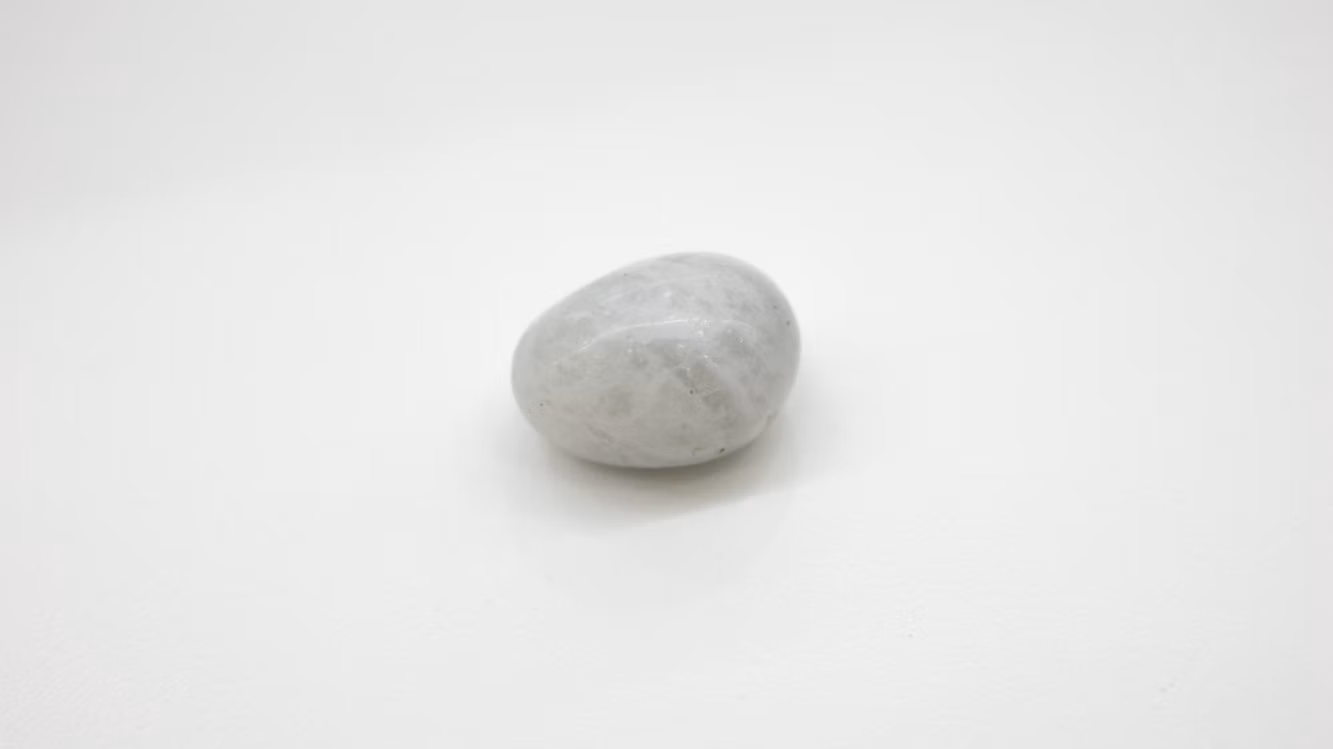
Moonstone is a variety of the feldspar mineral orthoclase that displays adularescence, a billowing, bluish-white light that moves across the stone's surface. This optical effect is caused by light scattering between alternating layers of orthoclase and albite feldspar within the crystal. The effect is similar to how light interacts with thin oil films on water.
Physical Properties
Mohs hardness: 6 to 6.5. Refractive index: 1.518 to 1.526. Specific gravity: 2.55 to 2.58. Crystal system: monoclinic. Moonstone has two cleavage directions at nearly 90 degrees, making it somewhat prone to chipping on impact. It is best suited for pendants, earrings, and brooches rather than rings that receive daily wear.
Colour and Quality
The most valued moonstone is transparent to semi-transparent with a strong, blue adularescent sheen floating above a colourless body. This "blue moonstone" or "blue sheen moonstone" from Sri Lanka commands the highest prices. Rainbow moonstone (actually a labradorite feldspar) shows multicoloured flashes and is widely used in jewellery. Indian moonstone typically shows an orange to brownish adularescence and is more affordable.
Major Sources
Sri Lanka produces the finest blue moonstone. India (Bihar and Rajasthan) produces abundant commercial-grade moonstone. Myanmar, Madagascar, and Tanzania also yield moonstone of varying quality.
Cultural Significance
In Hindu tradition, moonstone is associated with the moon and is considered sacred. It is sometimes used as an alternate for pearl in Vedic astrological prescriptions. Art Nouveau jewelers, particularly René Lalique, popularized moonstone in Western jewellery during the early 1900s, and it has experienced periodic revivals in popularity.
Need a Moonstone certified? GTCL provides comprehensive testing and certification for all gemstone types. Contact us →